
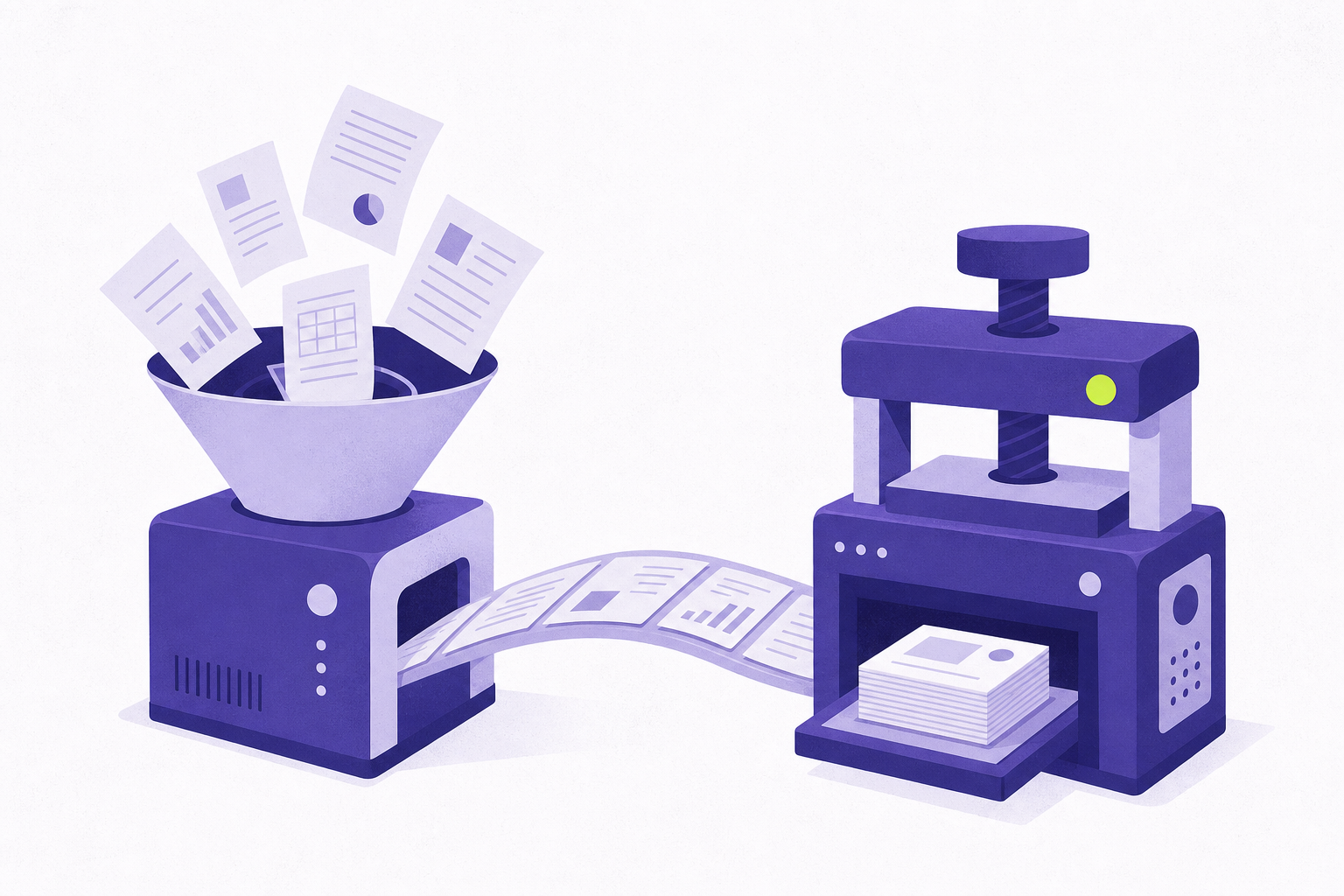
Two machines built for two different jobs
Lenders often assume the loan origination system covers the closing, and are surprised when it does not. The confusion is understandable, both live in the same lending shop, but an LOS and a deal workspace are different machines built for different jobs, and the gap between them is where a lot of coordination pain hides.
An LOS is a system of record for the lender's internal loan lifecycle: application, underwriting, approval, and the data and compliance that surround the credit decision. It is built for the lender's own workflow and does that job well. What it is not built for is the messy, multi-party, document-heavy coordination of getting a deal to fund with a dozen external parties who do not work for the lender.
The line between them
The cleanest way to see it is by what each is optimized for:
| Dimension | Loan origination system | Deal workspace |
|---|---|---|
| Primary user | The lender's internal team | Every party to the deal, most of them external |
| Job | Underwrite and approve the loan | Coordinate the documents and close it |
| Data shape | Structured loan and borrower data | Documents, statuses, and a request list |
| Strength | The credit decision and its compliance | Multi-party workflow and the closing record |
| External parties | Not designed for them | The main case: borrower, counsel, title, vendors |
What falls in the gap
When a lender assumes the LOS covers the closing, the coordination does not disappear; it happens somewhere the LOS cannot see, which in practice means email and a spreadsheet. The checklist lives in a spreadsheet, documents arrive by email, status lives in inboxes, and the borrower is emailed for items and updates. The LOS holds the loan data while the actual closing runs on the exact ad hoc tooling that produces version drift, status latency, and the last-two-weeks stall.
So the gap is not a missing feature in the LOS; it is a whole category of work the LOS was never meant to do, done by the least suitable tools available. That is why lenders with a perfectly good LOS still describe their closings as chaotic: the origination system is doing its job, and the closing coordination is being improvised beside it.
They coexist; they do not substitute
The resolution is not to replace the LOS. It is to stop asking it to do a job it was not built for, and to give the closing coordination a home built for that job: one live checklist every party works from, scoped access for external parties, and the audit record the closing produces. The two systems coexist cleanly, the LOS owns the credit decision and the loan data, and the deal workspace owns the coordination and the closing record, with the boundary at approval.
Lenders that make this distinction stop experiencing the closing as the chaotic appendix to a clean origination process. The measurable version is familiar: Prodeal customers close about 50% faster and recover roughly two days per deal, and SVN | Holman consolidated five separate closing tools into one, because the closing work that had been scattered across email and spreadsheets beside the LOS finally had a single place to live. An LOS is not a deal workspace, and asking it to be one is why the closing is hard.
SVN | Holman replaced five scattered closing tools with one deal workspace, alongside its origination system.
Questions lenders ask
- Is a loan origination system the same as a deal workspace?
- No. An LOS is the lender's internal system of record for underwriting and approving the loan, built for the credit decision. A deal workspace coordinates the documents and closes the deal with many external parties. They are different machines for different jobs, and the boundary sits at approval.
- Why do lenders with a good LOS still have chaotic closings?
- Because the LOS was never built for multi-party closing coordination, so that work happens where the LOS cannot see it, in email and a spreadsheet. The origination system does its job while the closing runs on the exact ad hoc tools that produce version drift and status latency.
- Do you replace the LOS with a deal workspace?
- No, they coexist. The LOS owns the credit decision and loan data; the deal workspace owns the closing coordination and the audit record, with the boundary at approval. Lenders that separate the two stop treating the closing as a chaotic appendix to a clean origination process.