
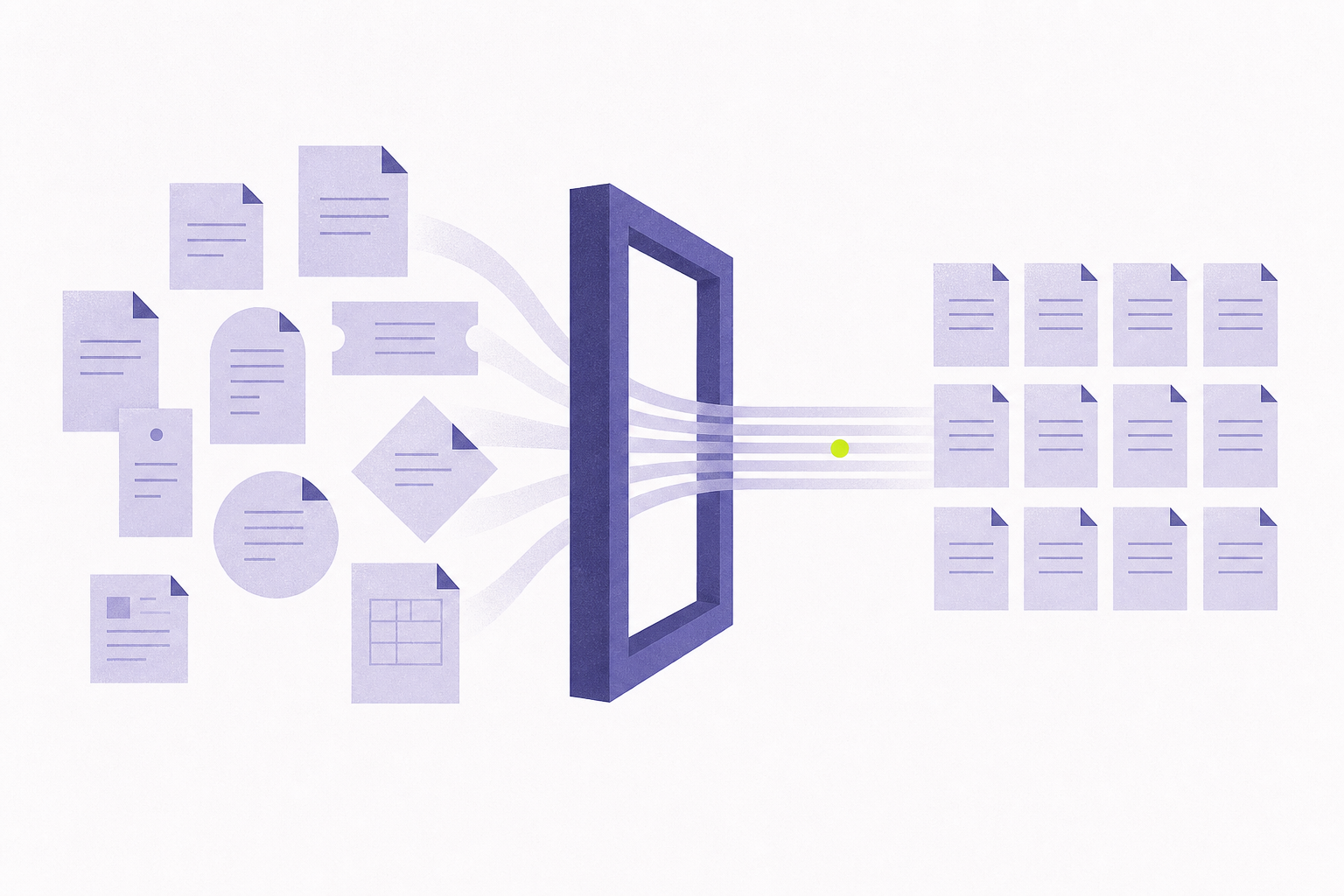
When every closer runs their own list, quality is a lottery
In a lot of lending shops, the closing checklist is personal. Each experienced closer has their own spreadsheet, refined over years, that they know intimately and no one else can fully read. It works, deal by deal, which is why it persists. But across the portfolio it means quality is a lottery: the file you get depends on which closer ran it, and no two of them are quite the same.
That variance is invisible until it is expensive. It surfaces when a closer is out and someone has to run their deal from a spreadsheet they cannot decode, when an examiner samples files and they do not match, or when a strong closer leaves and takes the shop's actual process out the door in their head. Personal checklists are a form of key-person risk disguised as expertise.
What a standard actually buys
Standardizing the checklist, one agreed list per deal type that everyone runs, is one of the cheapest quality-control moves a lending operation can make, and it buys several things at once:
- Consistency examiners rewardSampled files that match, because they were built to the same list. Consistency is exactly what sampling is designed to test.
- PortabilityAny closer can pick up any deal, because the list is shared, not personal. Coverage stops depending on who is in the building.
- Faster ramp for new closersA new hire learns the standard, not one veteran's idiosyncratic spreadsheet, so they are productive sooner.
- A place to encode lessonsWhen a deal teaches the shop something, the lesson goes into the standard and protects every future deal, instead of living in one person's memory.
Standard is not the same as rigid
The objection to standardization is that deals differ, and a rigid list cannot handle a construction loan and a participation and a HUD deal. That objection targets the wrong thing. Standardization does not mean one list for everything; it means a known, shared starting list for each deal type, which the closer adapts to the specific deal. The base is standard; the adaptation is expert judgment. You are not removing the closer's expertise, you are moving it from reinventing the list to tailoring a proven one.
Done right, a standard makes closers faster, not more constrained, because they start from ninety percent built and spend their attention on what is actually unusual about this deal. It is also what makes the record legible to everyone else, the ops team, the auditor, the next closer, because they can read a standard list in a way they could never read a personal spreadsheet.
The move is shared, not personal
The practical shift is from personal lists to shared templates by deal type, running on a system everyone works from rather than a spreadsheet each person owns. That is the change that converts a set of talented individuals into an operation, one where quality is a property of the process rather than a lottery on which closer you drew.
It is also the precondition for most other improvements a lending team wants. You cannot get a reliable portfolio view, a clean audit posture, or smooth new-closer onboarding on top of fifty personal spreadsheets, because there is no shared object to build on. The standard checklist is that shared object. SVN | Holman consolidating five systems into one is this move at the tooling level; standardizing the checklist is the same move at the process level, and it is the cheaper half to start with.
Consolidating tooling, as SVN | Holman did five-to-one, is the same move as standardizing the checklist: one shared object instead of many personal ones.
Questions lenders ask
- Why standardize closing checklists across a lending team?
- Because personal, per-closer checklists make quality a lottery that depends on who ran the deal, and they hide key-person risk as expertise. A shared standard buys consistency examiners reward, portability so any closer can cover any deal, faster onboarding, and a place to encode lessons that protects future deals.
- Doesn't standardization make closers rigid?
- No, if done right. A standard is a known, shared starting list per deal type that the closer adapts to the specific deal. The base is standard, the adaptation is expert judgment. Closers get faster because they start ninety percent built and spend attention on what is actually unusual.
- What does checklist standardization enable?
- It is the precondition for a reliable portfolio view, a clean audit posture, and smooth onboarding, none of which can be built on fifty personal spreadsheets, because there is no shared object. The standard checklist is that shared object, and it is the cheapest quality move a shop can make.
- The due diligence checklist, built to be runThe operating discipline behind a good template.
- The commercial loan closing checklistThe baseline this standardizes.
- The commercial loan closing processWhere the template starts each deal.
- Deal management software for commercial lendersThe system that holds the templates.